 von
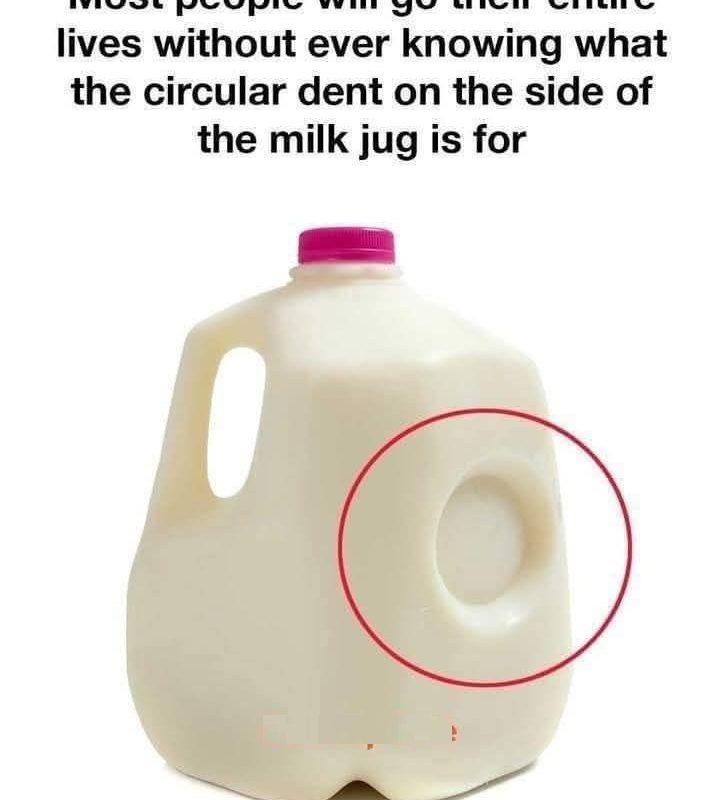
Have you ever picked up a gallon of milk and noticed that weird circular dent on the side? Maybe you thought, “Hmm, must just be part of the design.” And then you moved on with your day, never giving it a second thought.
Well, it turns out that little dent has a very real, very important purpose. In fact, it might just be one of the most clever, low-tech safety features in your kitchen—one that most people never even notice.
So what’s the deal? Why do milk jugs have that dent? Let’s break it down.
1. 💥 It’s a Built-In Safety Feature: Pressure Relief Valve for Spoiled Milk
Here’s what most people don’t realize: as milk begins to spoil, it produces gas—mostly carbon dioxide. If that gas builds up in a tightly sealed plastic jug with no room to expand, it can cause the container to bloat or even burst.
That’s where the circular dent—technically called a flexible expansion panel—comes in:
- It gives the jug space to expand outward without popping.
- It acts as a kind of visual warning sign—if the dent is bulging outward, the milk might be bad.
- It helps reduce the risk of exploding containers during storage and transport.
Think of it like a balloon that has just a little room to stretch. That small flex zone can save you from a fridge full of spoiled milk mess—or worse, from drinking something you really shouldn’t.
2. 📦 It Adds Structural Strength During Shipping & Storage
You might be surprised to learn how many jugs of milk are stacked, jostled, and squeezed before they end up on your fridge shelf.
From factory to warehouse to grocery store to shopping cart, your milk container goes through a lot.
And that dent?
- Adds extra strength to the plastic jug’s shape
- Prevents the jug from collapsing under the weight of other jugs during stacking
- Helps the jug maintain its seal even when pressure is applied from the outside
This simple design tweak helps reduce the risk of cracks, leaks, and wasted product. It’s a genius bit of engineered simplicity—keeping your milk safe and fresh until you’re ready to pour.
3. ❄️ It Helps With Cooling and Temperature Control
Let’s say you just brought home a cold gallon of milk and popped it in the fridge. That dent? It’s not just sitting there doing nothing.
Turns out, the shape of the jug (including the dent) helps:
- Distribute cold air more evenly inside and around the jug
- Prevent warm spots where bacteria might grow faster
- Maintain the overall temperature longer, especially during brief exposures to heat (like when you’re loading groceries or pouring cereal)
This helps slow down spoilage and keeps your milk tasting fresher, longer.
Pretty cool, right?
4. 🤖 A Glimpse Into the Future: Smart Packaging Potential
Here’s where things get really interesting.
Packaging experts and food safety researchers are starting to look at that dent as more than just a passive safety feature.
In the not-so-distant future, you might see milk jugs where:
- The dent changes color if pressure or temperature becomes unsafe
- It flattens or pops to indicate spoilage
- It integrates with smart labels that detect bacterial activity or pH changes
Imagine checking your milk by simply glancing at a color-coded dent. No more sniff test. No more taste gamble. Just smart packaging doing the work for you.
We’re not quite there yet—but it’s coming.
So… What Should You Do with This Info?
Now that you know what that dent does, here’s how you can use it:
✅ Check the Dent Before You Buy
- If it’s bulging out or looks swollen—skip it.
- A dent that has expanded could mean spoiled milk or a damaged seal.
✅ Monitor the Dent at Home
- A popped-out dent in your fridge? Time to sniff, test, or toss.
- The jug may have been left out too long or is starting to go bad.
✅ Use It As a Built-In Freshness Gauge
- When in doubt, that dent is your first line of defense.
It’s such a subtle feature, but it might save you from food poisoning or a very bad latte.
🤓 Fun Fact: It’s Not Just Milk
You’ll spot this dented design on more than just milk jugs:
- Large juice containers
- Vegetable oil bottles
- Distilled water jugs
- Even some vinegar and cleaning products
Why? Because any liquid that may expand, build pressure, or be heat-sensitive benefits from this kind of smart structural flexibility.
How to Spot a Problem with Your Milk Jug
Use this simple checklist next time you handle milk:
| Sign | What It Means |
|---|---|
| Dent is pushed out | Possible gas buildup (spoilage) |
| Jug looks bloated | Do not consume—may be unsafe |
| Dent is deeply sunken | Normal—pressure is equalized |
| Unusual odor | Toss it, regardless of dent |
| Liquid leaks around cap | Compromised seal—avoid use |