 von
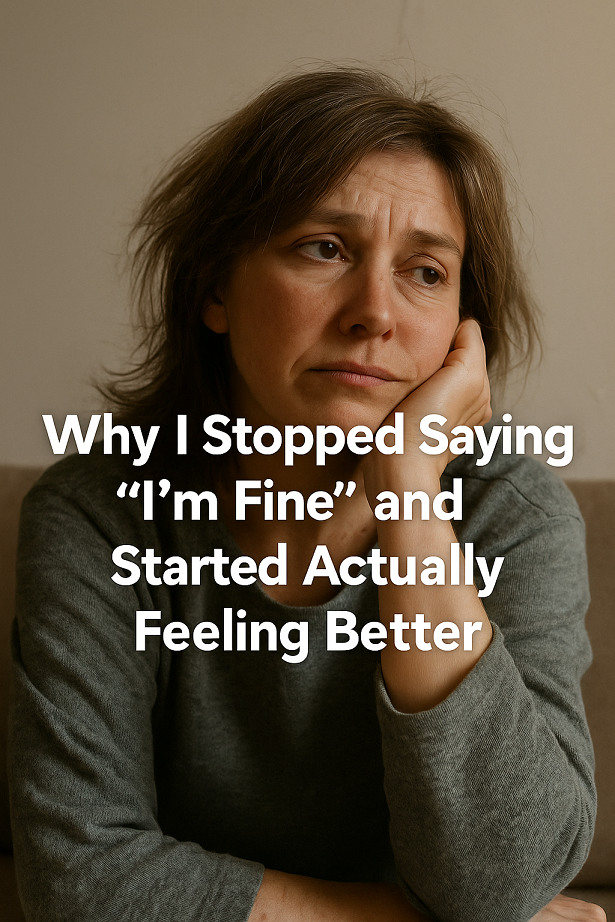
You know, I don’t even know when I first started saying it, “I’m fine.” It just kind of happened, I guess. Like one day you’re just a regular person, and then the next, every time someone asks how you’re doing, you say, “I’m fine.” Like a robot. Like it’s automatic. And it’s not like I really thought about it—saying “I’m fine” was just easier, you know? Easier than trying to explain why I was tired all the time, why I felt like crying at the drop of a hat, why I was snapping at the kids over nothing, why my laundry pile looked like a mountain that could swallow me whole. I mean, what was I supposed to say? That I felt like I was drowning most days? That I couldn’t even remember the last time I actually sat down and enjoyed a cup of coffee without thinking about the ten thousand things I had to do? It just seemed easier to say, “I’m fine,” smile that tight little smile that doesn’t reach your eyes, and move on. Except I wasn’t fine. Not even close.
It was a Tuesday when it really hit me, I think. I was standing in the kitchen, looking at the sink full of dishes, and I felt this weird pressure in my chest, like I couldn’t breathe. And the tears just came out of nowhere, like, full-on ugly crying. And my youngest, Ellie, she came running in and said, “Mama, are you okay?” And I wiped my face and told her, “Yeah, baby, Mama’s just tired, I’m fine.” And I remember thinking, even while I was saying it, how stupid that was. I wasn’t fine. I was exhausted. I was overwhelmed. I was so far from fine I couldn’t even see it anymore. And yet there I was, saying it again.
That night, after the kids were in bed and my husband was snoring on the couch, I sat there in the dark, and I just started thinking about how many times I’d said “I’m fine” in the past week. And it was a lot. To my mom on the phone when she asked if I was doing okay with the kids and work and all the stuff. To my friend Jenna when she texted and asked if I wanted to get coffee. To the lady at the grocery store when she saw me looking like a mess with a cart full of frozen pizza and granola bars and asked if I was alright. “I’m fine.” Every single time. And it hit me then, how much I’d been lying—not just to them, but to myself.
Because I wasn’t fine. I was tired. I was angry. I was lonely. I was trying to hold together a life that felt like it was falling apart at the seams. And for what? So people would think I had it all together? So I wouldn’t have to explain why I felt so empty some days? So I wouldn’t have to admit to myself that I wasn’t happy? I don’t know. But sitting there in the dark, it just felt like I’d been carrying around this big, heavy bag of rocks and pretending it was no big deal. And I was tired of it.
So I decided that night that I was going to stop saying it. Just stop. I wasn’t going to say “I’m fine” anymore if it wasn’t true. And let me tell you, it was harder than I thought. The next day, when my neighbor stopped me while I was bringing the trash cans in and asked, “How are you?” I almost said it out of habit. The words were right there on the tip of my tongue. But I stopped myself, and I said, “Honestly? I’m kind of overwhelmed.” And she looked surprised, like she didn’t know what to say. And I felt weird, like maybe I was making her uncomfortable, but I also felt this tiny little flicker of relief. Like maybe I was finally being honest.
And the more I did it, the more I realized how often we all say “I’m fine” when we’re not. It’s like this weird social contract we all signed without knowing it—smile, nod, say you’re fine, keep going. And it’s so isolating. Because if everyone’s “fine,” then no one’s struggling, right? And you feel like the only one who’s falling apart. But the truth is, we’re all struggling with something. We’re all carrying stuff we don’t talk about.
I started noticing it more in other people too. Like my friend Jenna, the one who’d asked me to coffee? I finally told her I wasn’t fine, and we sat there in that little coffee shop, both of us with tears in our eyes, talking about how hard it is to be a mom, how exhausting it is to feel like you’re never enough, how scary it is to admit that out loud. And it felt like this huge weight lifted off both of us. Like we weren’t alone anymore. Like we didn’t have to pretend.
And it wasn’t like my life magically got better overnight. I still had days when the kids drove me crazy, when the laundry pile threatened to eat me alive, when I felt like I was barely holding it together. But just saying it out loud—“I’m not fine”—made it a little bit easier. It was like giving myself permission to not have it all together all the time. And I started noticing little things, like how much better I felt after a walk outside, or how much calmer I was after sitting down for five minutes with a cup of tea, or how just venting to a friend for ten minutes made the day feel less heavy.
I started doing these little things for myself, things I used to think were selfish or a waste of time. Like taking a bath with a book after the kids went to bed, or sitting in the car for an extra five minutes before going inside just to breathe. I started saying no more, too. No, I can’t help with that bake sale. No, I can’t take on that extra project at work. No, I can’t be everything for everyone all the time. And every time I said no, it was like I was saying yes to myself.
And yeah, there were people who didn’t get it. People who thought I was being lazy or selfish or just not trying hard enough. But I realized that I couldn’t keep living my life trying to make everyone else happy while I was falling apart inside. I had to take care of myself, too.
So now, when someone asks me how I’m doing, I pause. And I think about it. And if I’m having a hard day, I say that. I say, “You know what? Today’s been rough.” Or “I’m feeling kind of burnt out.” Or even just, “Honestly, I’m not doing great right now.” And sometimes, that opens the door to a real conversation, and sometimes it doesn’t. But it feels better than lying.
And the crazy thing is, I feel better. Not because everything is magically perfect now—trust me, it’s not—but because I’m not carrying around this lie anymore. I’m not pretending to be fine when I’m not. And that, in itself, feels like a weight lifted.
So if you’re reading this and you’re one of those people, like I was, who always says “I’m fine” even when you’re not—just know, you don’t have to. You don’t have to be fine all the time. It’s okay to be a mess. It’s okay to not have it all figured out. It’s okay to say, “I’m struggling.” And maybe, just maybe, if we all stopped pretending so much, we’d feel a little less alone.
And I think that’s the point, isn’t it? To feel less alone. To know that you’re not the only one who’s tired, or sad, or angry, or overwhelmed. To know that it’s okay to not be okay sometimes.
I don’t have all the answers, not even close. But I know that for me, stopping that automatic “I’m fine” has been one of the best things I’ve done for my mental health. It’s not easy, and I still catch myself falling back into it sometimes. But I’m trying. And that’s all any of us can really do, right? Just try, one day at a time.So yeah, I’m not always fine. But I’m working on it. And that feels a whole lot better than pretending.