 von
Have you ever noticed how a certain color just calls to you—like you can’t stop staring at it? Maybe you’re scrolling through Pinterest, and a bold red or a soft blue just grabs your attention. Or you walk into a room and instantly feel a vibe from the colors in the space. Well, it turns out, that might not be just a coincidence.
There’s a popular saying that’s been making the rounds on social media:
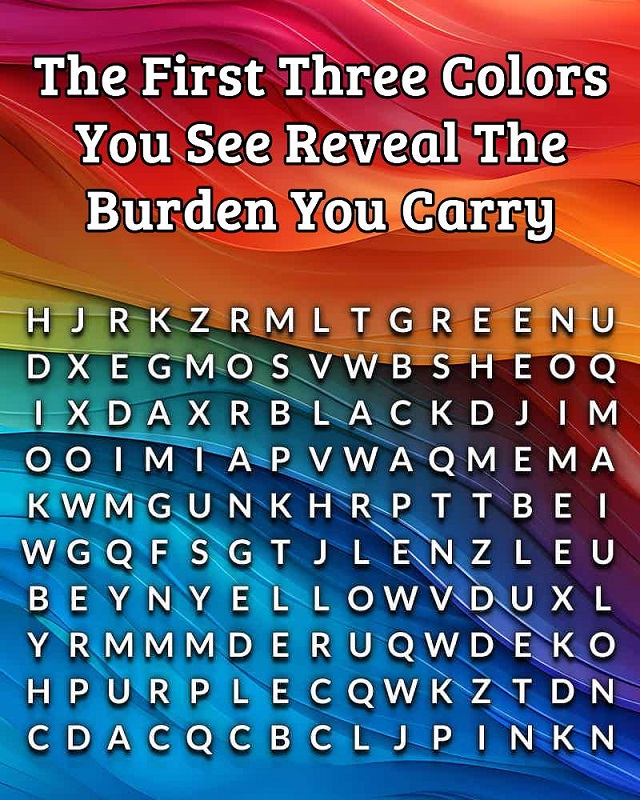
“The first three colors you see reveal the burden you carry.”
Sounds a little dramatic, right? But it’s actually a fun way to tap into your subconscious and get a glimpse of what might be going on under the surface. So, what does it really mean? Let’s break it down and explore how color and emotion are connected—and how those first colors you’re drawn to might say a lot more about you than you realize.
🎨 The Emotional Language of Color: Why Colors Feel Like Something
Colors aren’t just seen—they’re felt. Think about it. Have you ever walked into a room painted a certain color and immediately felt calm, anxious, or even excited? Or opened your closet and just felt drawn to a specific shirt because of its color? That’s because color is deeply tied to our emotions. It’s not just about aesthetics; it’s about feeling.
Let’s take a quick look at some common emotional associations with colors:
- 🔴 Red: Passion, love, anger, conflict. Red is a bold color, often connected to intense emotions.
- 🔵 Blue: Calm, sadness, peace, responsibility. Blue is the color of the sky and sea, often linked to serenity but also melancholy.
- 🟢 Green: Growth, envy, balance, healing. Green connects us to nature and can feel fresh or even jealous, depending on the shade.
- 🟡 Yellow: Joy, optimism, anxiety, energy. Yellow is the sunshine color—happy, but sometimes overstimulating.
- 🟣 Purple: Wisdom, mystery, spirituality, loneliness. Purple often feels deep and introspective.
- ⚫ Black: Power, grief, protection, formality. Black is strong but also heavy, often tied to mourning or self-protection.
- ⚪ White: Purity, clarity, avoidance, perfectionism. White can feel fresh, but also a bit sterile.
- 🟠 Orange: Energy, enthusiasm, pressure, creativity. Orange is fun but can be overwhelming if you’re already stressed.
- 🩶 Gray: Fatigue, indifference, neutrality. Gray is the color of in-between, often signaling emotional numbness.
🧠 Why Your Brain Feels Colors: The Science Behind It
Okay, so why do we even feel colors in the first place? Is this just some woo-woo concept, or is there real science behind it? Well, a bit of both.
Your brain doesn’t just see color; it interprets it based on experiences, culture, and subconscious associations. For example, red can make your heart rate go up. Blue can actually slow down your breathing. These aren’t random—they’re hardwired responses from how your brain processes visual information.And here’s something cool: colors are processed in the same part of your brain that deals with emotions and memory—the limbic system. That’s why certain colors can trigger memories, feelings, or even physical sensations.Ever walked into a hospital room and felt a little cold or distant because of all the white walls? Or felt super hungry when you saw that bright red fast-food logo? That’s the color-emotion connection at work.
🌍 The Cultural Side of Color: It’s Not Universal!
But here’s the thing: color meanings aren’t the same everywhere. What feels calming in one culture might feel heavy or even scary in another. Let’s take a quick look at how color meanings can shift:
| Color | In the West (US & Europe) | In the East (China, Japan, India) |
|---|---|---|
| 🔴 Red | Passion, danger, love | Luck, celebration, prosperity |
| ⚪ White | Purity, weddings, clarity | Mourning, death |
| ⚫ Black | Elegance, grief, power | Authority, strength, but also negativity |
| 🟡 Yellow | Happiness, energy | Royalty, sacredness |
| 🟢 Green | Nature, health, envy | Fertility, life, growth |