 von
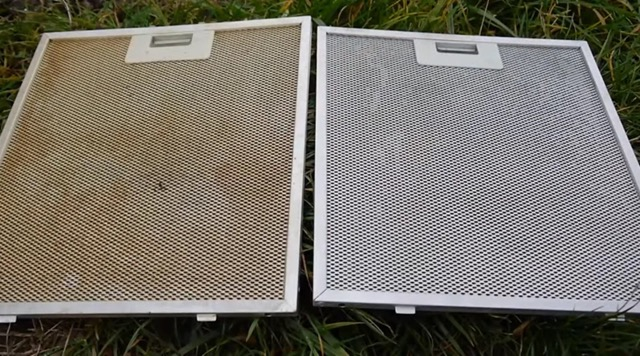
Let me first explain why these filters get dirty so quickly. The mesh panels absorb a lot of grease, even if it doesn’t seem like it. We wipe down the stove and pans regularly, but we rarely get around to cleaning the filter. And when the mesh is fine, grease tends to accumulate heavily. It wouldn’t be such a big deal if this was just about hygiene – but it’s also a fire safety issue. Grease that has built up over a long period can easily ignite when exposed to an open flame, which is dangerous and quite realistic. Not to mention the constantly polluted air, since the range hood can’t function properly and airflow becomes restricted. On top of that, clogged filters can affect the operation of the hood itself – it may start to make more noise and lose suction power.
I think many people face the same issue: mesh filters, especially with smaller openings, get clogged very quickly, and the hood stops doing its job effectively. My husband tried many methods and finally found one that really works – and it’s surprisingly simple. The trick? Just use a regular drain cleaner. You can use any product that contains sodium hydroxide (NaOH) and other basic cleaning components.
Let’s move on to the actual cleaning process. You’ll need a suitable container – I used an old oven tray, which is shallow but wide enough. Place the filters in the tray and pour the drain cleaner over them. You’ll immediately see a foamy reaction spreading across the surface. It’s best to leave it for 20–30 minutes so the grease has time to soften. For best results, flip the filter halfway through soaking. If the grease doesn’t come off easily, add more cleaner mixed 1:1 with water and let it sit a bit longer.
Now it’s time to scrub – use a moderately stiff brush. Rinse thoroughly under running water while scrubbing with a sponge or brush. Important: Always wear gloves, as drain cleaners contain strong alkaline substances that can irritate or burn your skin. Be careful. If you’re doing this indoors, open the windows and make sure to air out the space thoroughly afterwards.
If the buildup is especially stubborn, you can also pour hot water over the filter, sprinkle baking soda, and scrub with a sponge. Baking soda helps break up the grease layer on the surface. After using chemical cleaners, it’s a good idea to rinse the filter with vinegar water or a citric acid solution to neutralize any leftover residue from the lye.
Ideally, you should clean the filters at least once a month. If you frequently fry meat or cook oily foods, then once a week might be better. One old-school trick: wrap the filter in aluminum foil – this keeps the grease from reaching the filter directly, making future cleaning much easier.
One more important note: if your filter is made of aluminum, avoid using strong alkaline cleaners like drain cleaner. Sodium hydroxide reacts with aluminum and can easily damage the surface. But if your filter is made of stainless steel, you don’t have to worry.